
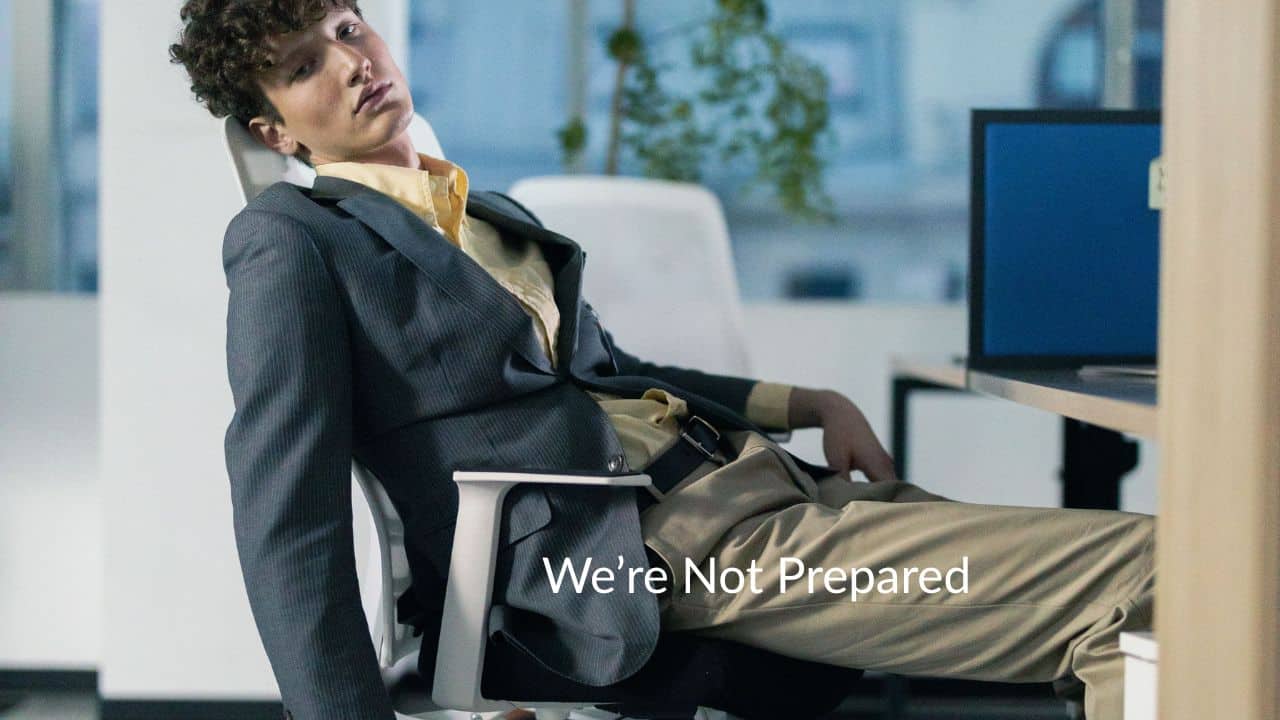
The past week has been a scorcher in London. The Met Office issued amber warnings, then red. Temperatures held in the mid-to-high 30’s for days on end. Schools closed early. Hospital staff struggled to keep patients comfortable in wards that were never designed for this kind of heat. Trains slowed down or were cancelled, as rails expanded and buckled under the sun.
And what did we do? We queued for fans. We panic-bought portable air conditioning units. We reached, as we always do, for the quick fix: a simple technological solution that doesn’t really address the deeper problem. It’s like putting a plaster on a wound that needs surgery.
Here’s what struck me most, though. Our homes, our schools, our hospitals, our entire infrastructure — and that includes our new builds — were designed for a climate and a Britain that no longer exist. And now, facing the reality of more frequent, more intense weather events, we face a choice: retrofit everything at enormous cost and disruption, or carry on as usual and wait to be blindsided again.
I reckon we’ll carry on as usual. That’s what we usually do.
We respond to the immediate crisis, declare it managed, and return to business as normal. Until the next one arrives to remind us, again, that we were never truly prepared.
And it isn’t just our physical infrastructure that’s the problem. It’s our institutions. Our organisations. The systems through which we try to make sense of and lead in this world.
I’ve written about this before. Our organisations and institutions are simply not resilient enough for the demands of the 21st century. The pace of change has outrun the systems we built to manage it. And those systems are now global, increasingly complex, deeply interconnected. So much so that no single person or team can fully understand them, let alone anticipate how a change in one corner of the world will cascade through everything else. A war in the Middle East, and within weeks, the price of oil surges, the cost of living rises, entire economies feel the strain.
Being a leader in this environment is genuinely hard. Strategies that worked five years ago are already losing their edge. Decisions that once felt manageable are now confused with too much information, too much misinformation, and rarely the right information. The short-term future feels unpredictable. The long-term feels almost impossible to plan for.
And yet, long-term thinking is precisely what this moment demands. Not the old kind of long-term thinking, the five-year plan with its tidy assumptions and linear projections. Something different. A willingness to step back, see our situation clearly and dispassionately, and acknowledge honestly: the old rules no longer apply.
We are in an in-between world. The old order is breaking down. The new order hasn’t yet emerged. That is genuinely uncomfortable. And also, if we can hold our nerve, a moment of immense possibility. The space between what was and what will be is where everything gets reimagined and created anew.
The question is whether we will use this moment or waste it.
Will we, quietly and intentionally, begin to simplify? To build more resilient organisations, communities, ways of working and living? To learn from desert peoples how to stay cool when the heat is relentless, and adapt those answers with intelligence and creativity?
Or will we go on with business as usual, waiting for the next heat wave, the next pandemic, the next unnecessary crisis to remind us, once again, that we were ill-prepared?
The signs are everywhere. The question is whether we are willing to read them.

Leave a Reply
You must be logged in to post a comment.